


Why Swedish Driving License Regulations Is Fastly Changing Into The Ho…
페이지 정보

본문
Swedish Driving License Regulations: A Complete Guide to Obtaining Your Körkort
Sweden keeps one of the most thorough and safety-oriented driving license systems in the world. Known locally as "KöPa ÄKta KöRkort," the Swedish driving license represents not just approval to drive, but proof that the holder has gone through extensive training and evaluation developed to produce accountable, competent chauffeurs. Whether you are a new resident planning to exchange your foreign license, a prospective driver beginning your journey, or just curious about how licensing operates in this Nordic nation, understanding the Swedish system supplies valuable insight into the country's commitment to roadway security and motorist education.
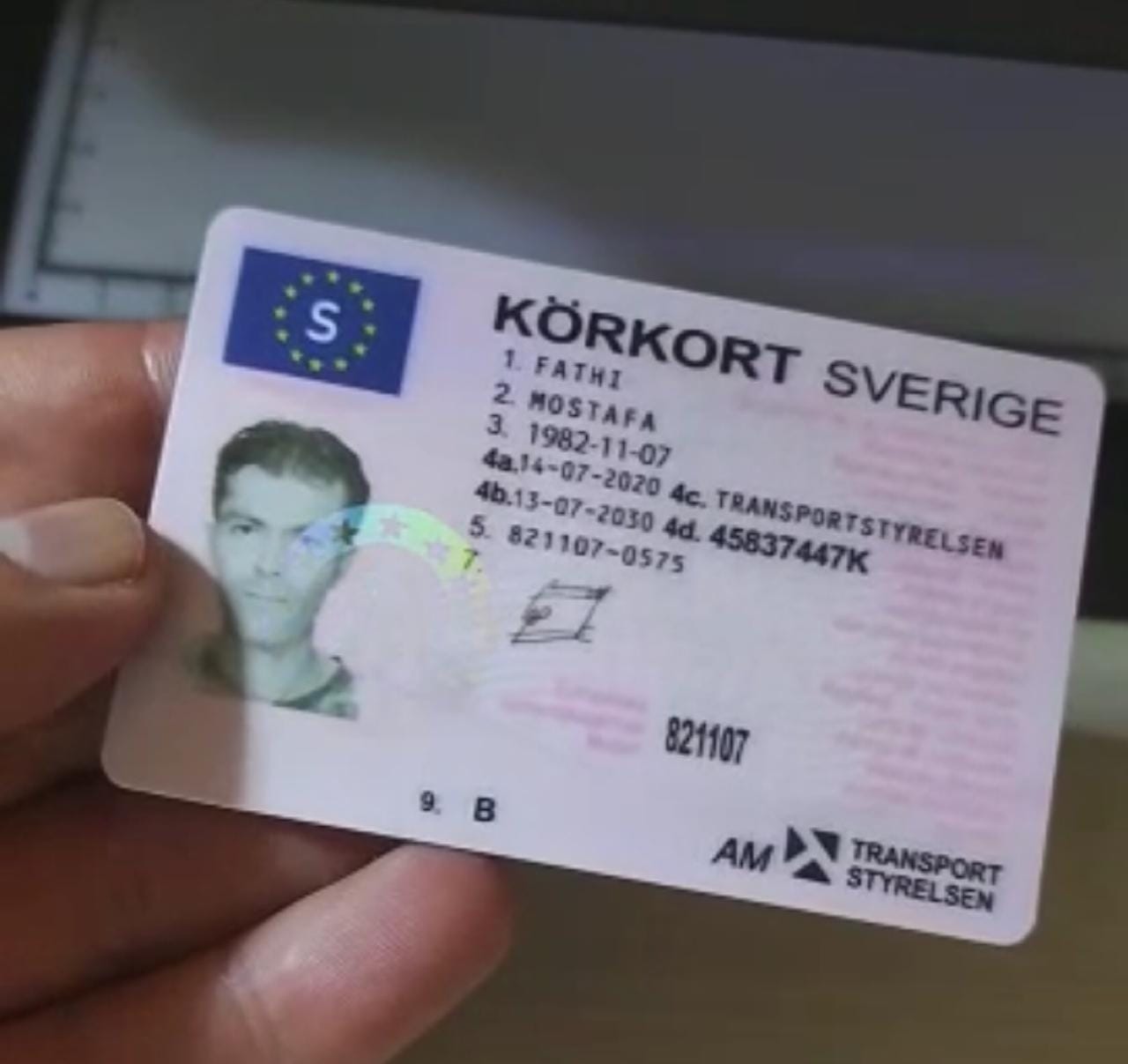
The Structure of Swedish Driving Licenses
Swedish driving licenses are arranged into distinct classifications, each authorizing the holder to operate various kinds of automobiles. This classification guarantees that chauffeurs possess specialized knowledge and skills appropriate to the vehicle they intend to drive. The licensing system has actually developed over years, integrating lessons from traffic safety research and adapting to changes in automobile technology and transportation requirements.
The most common classification is Category B, which permits the operation of motor cars with a maximum licensed mass of 3,500 kgs, developed to bring no more than 8 travelers in addition to the motorist. This category encompasses basic guest cars and trucks, which represents most of personal automobiles on Swedish roadways. To acquire a Category B license, applicants need to complete both theoretical and useful elements, consisting of risk understanding training and a driving test carried out by a certified examiner.
For those interested in bikes, Rådgivning Om Körkort Sweden uses 2 main paths. Category A1 permits the operation of motorbikes with an engine displacement not exceeding 125 cubic centimeters and a power output not going beyond 11 kilowatts, while Category A covers unlimited motorbikes after a progression period. The progressive access system needs riders to get experience with lower-powered motorbikes before advancing to more effective machines, a method that has contributed to considerably lower accident rates among motorcyclists.
Commercial driving classifications exist for those wishing to run larger vehicles. Category C covers trucks with an optimum authorized mass going beyond 3,500 kilograms, while Category D authorizes the operation of buses designed to bring more than eight guests. Additional recommendations such as BE, CE, and DE permit the operation of automobiles with trailers, reflecting the specialized abilities required for safe handling of much heavier, longer combinations.
| License Category | Car Type | Minimum Age | Secret Requirements |
|---|---|---|---|
| AM | Two- or three-wheeled mopeds | 15 | Theory assessment |
| A1 | Motorbike (≤ 125cc, ≤ 11kW) | 16 | Theory and dry runs |
| A | Unlimited motorbike | 20 (or 24 with progressive access) | Progression from A1 + sophisticated screening |
| B | Traveler automobile (≤ 3,500 kg) | 18 | Theory test, danger training, driving test |
| BE | Cars and truck with trailer (>> | 750kg)18 Classification B + additional testing | |
| C | Truck (>> | 3,500 kg)21 Classification B + medical certificate + screening | |
| D | Bus (>> 8 guests) | 25 | Category B + medical certificate + screening |
The Path to Obtaining a Swedish License
The journey towards acquiring a Swedish driving license follows a structured pathway designed to build skills gradually while ensuring that all candidates meet consistent standards. This process reflects the Swedish Transport Administration's approach that driving is an advantage carrying significant responsibility, which proper preparation results in more secure roads for everyone.
The first action for most prospective motorists includes enrolling with an acknowledged driving school, called" trafikskola." While it is technically possible to prepare separately and only utilize a driving school for the necessary tests, the huge majority of prospects gain from professional instruction. Driving schools supply structured curricula that cover all required proficiencies, from fundamental lorry control to complicated traffic circumstances. Swedish driving schools are needed to satisfy specific standards set by the transport authority, guaranteeing consistent quality throughout the nation.
Candidates must finish mandatory theoretical education, which includes the "Riskutbildning del 1" (Risk Training Part 1) focusing on compound abuse prevention and its results on driving ability, and "Riskutbildning del 2" (Risk Training Part 2), which attends to advanced hazard perception and vehicle characteristics in slippery conditions. These danger training elements are distinguishing characteristics of the Swedish system, emphasizing proactive security awareness rather than simply teaching traffic guidelines.
The theory examination, administered by the Swedish Transport Agency, tests knowledge of traffic regulations, roadway signs, vehicle maintenance, and situational judgment. This computer-based test presents scenario-based concerns requiring prospects to demonstrate not just memorization however genuine understanding of safe driving concepts. The evaluation cost and preparation materials are available through driving schools or straight from the transport authority's website.
Following successful completion of the theory test, prospects progress to useful training and the driving test. The practical examination evaluates actual driving capability on public roads under varied conditions, with certified inspectors examining whatever from parking maneuvers to highway combining to interaction with other road users. This strenuous basic guarantees that license holders can handle real-world driving obstacles with confidence and securely.
Transforming Foreign Licenses in Sweden
Sweden maintains different procedures for license conversion depending upon the nation of origin, showing international contracts and reciprocity factors to consider. Understanding which pathway uses to your scenario can conserve significant time and expense.
Chauffeurs from European Union and European Economic Area countries may exchange their valid licenses for Swedish equivalents without re-testing, supplied the original license is current and valid. This exchange process involves submitting an application to the Swedish Transport Agency together with the original license, recognition documents, and passport-sized photos. A modest administrative charge applies, and the converted license will stand for the staying period of the initial document, up to 10 years for classifications A, A1, AM, Skaffa Svenskt Körkort B, BE, and five years for KöP ÄKta svenskt Körkort C, CE, D, and DE classifications when the holder is over 45 years of age.
Licenses from particular countries outside the EU/EEA might be recognized through bilateral arrangements, possibly enabling direct exchange. Sweden has established recognition contracts with numerous countries, and the Transport Agency maintains an extensive list of countries whose licenses might be eligible for conversion. Candidates with licenses from non-recognized countries should undergo the complete Swedish licensing process, including theory and Skaffa svenskt körkort useful examinations, regardless of their driving experience somewhere else.
New homeowners holding foreign licenses ought to know that they may use their initial license in Sweden for a minimal duration, normally one year from developing residency. After this period, conversion or complete licensing ends up being necessary. Preparation ahead avoids circumstances where driving becomes prohibited while waiting for administrative processing.
Key Regulations and Responsibilities
Holding a Swedish driving license involves continuous obligations that help maintain high standards of roadway security throughout the chauffeur's life time. The system stresses that licensing is not a one-time achievement but a continuous commitment to safe driving.
Swedish law needs all chauffeurs to bring their license when running a vehicle, though digital versions available through government applications have been accepted since technological infrastructure permits confirmation. Penalties for driving without a legitimate license variety from considerable fines to potential car impoundment, reflecting the severity with which authorities treat this requirement.
The Swedish charge point system, referred to as "straffpunkter," assigns points for different traffic infractions. Building up a lot of points within specified periods can lead to license suspension, during which driving becomes prohibited. This system encourages constant compliance with traffic policies rather than occasional care.
Medical requirements apply to business license holders and may be mandated for basic license holders at particular ages or when health conditions emerge that might affect driving ability. The Swedish Transport Agency provides clear standards on health conditions needing reporting, and chauffeurs bear duty for preserving medical fitness.
Renewal procedures differ by license classification and motorist age. Standard Category B licenses remain valid until the holder reaches 70 years of age, at which point renewal requires a medical evaluation. Beyond age 70, licenses are released for periods of approximately 5 years, each needing ongoing medical certification.
Often Asked Questions About Swedish Driving Licenses
For how long does it generally require to acquire a Swedish Category B license?
The timeline varies considerably based on individual ability, practice frequency, and scheduling accessibility. Most candidates require between 3 and 6 months from registration to finishing the driving test, though determined learners have accomplished this in just eight weeks. The obligatory waiting periods between certain training elements, risk education requirements, and test scheduling availability generally extend the procedure beyond what quick learning alone would permit.
Can I drive in Sweden with my foreign license instantly upon arrival?
EU/EEA license holders might drive in Sweden utilizing their legitimate foreign license for one year from developing residency. After this period, the license should be exchanged for a Swedish comparable or rendered invalid for driving purposes. Licenses from outside the EU/EEA are generally legitimate for one year also, though conversion requirements depend upon the particular native land.
Is it possible to take the driving test in English instead of Swedish?
The theory assessment is readily available in several languages consisting of English, allowing candidates to demonstrate understanding without language barriers in Swedish. The useful driving test, nevertheless, is conducted in Swedish, requiring at minimum adequate command of Swedish traffic terms and examiner instructions to comprehend and react appropriately during the assessment.
What occurs if I fail my driving test in Sweden?
Prospects who do not pass might retake the examination after a waiting period, which is normally at least one week. There is no limit on the number of efforts, though each attempt sustains the evaluation fee. Lots of candidates benefit from extra training sessions focusing on areas recognized as shortages during unsuccessful attempts.
Exist distinctions in licensing requirements between rural and urban locations in Sweden?
The core licensing requirements are constant throughout Sweden, as the Transport Agency sets national standards relevant to all candidates regardless of area. Nevertheless, the practical driving test path varies in between examination centers, with urban locations generally presenting more complex traffic circumstances while rural paths might highlight highway driving and differing road conditions.
Maintaining Your Privilege
The Swedish driving license system reflects a nationwide commitment to road security that extends throughout the licensing procedure and beyond. By requiring comprehensive training, rigorous screening, and ongoing responsibility, Sweden has actually attained a few of the lowest traffic fatality rates in the world. For those browsing the system, whether beginning their driving journey or moving existing qualifications, the process, while requiring, ultimately serves the shared goal of safe roads for everybody.
Obtaining and keeping a Swedish driving license represents more than administrative conclusion; it shows a commitment to the abilities, understanding, and mindsets that keep Swedish roadways amongst the safest worldwide. Whether you are a new resident planning your path to Swedish licensure or a potential driver starting your education, the investment in correct preparation pays dividends in security, proficiency, and confidence behind the wheel.
- 이전글What Is Sweden Driving License Purchase And How To Utilize What Is Sweden Driving License Purchase And How To Use 26.06.17
- 다음글The Ultimate Glossary On Terms About Driving License Express Sweden 26.06.17
댓글목록
등록된 댓글이 없습니다.